
Legacy Insurance Software Modernization Guide: Transform Your Insurance Software for the Digital Era
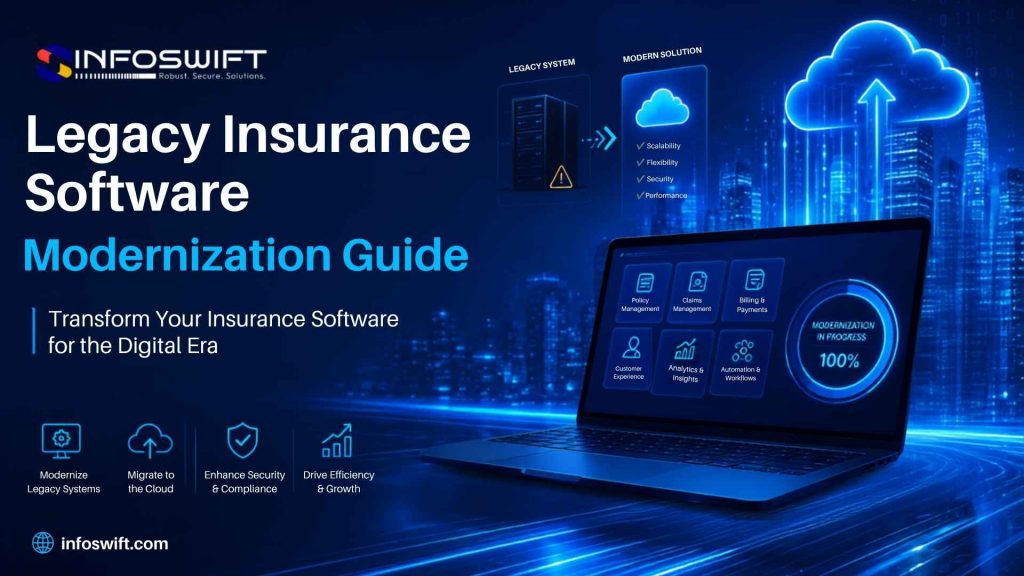
Most insurance agencies are still running critical operations on insurance software built for a different era. Quoting, policy management, and claims processing often depend on systems that were never designed for cloud access, API integrations, or automation. The result is slower service, higher operating costs, and a growing gap between what agencies can deliver and what customers now expect.
This guide breaks down why legacy insurance agency software creates operational drag, what modern software for insurance should include, and how a structured modernization roadmap moves an agency from outdated infrastructure to a scalable, cloud-based insurance quote system without disrupting day-to-day operations.
Signs Your Insurance Agency Software Needs Modernization
Outdated insurance agency software rarely fails all at once. It shows up first as friction small daily slowdowns that compound into real operational cost. Common warning signs include:
- Slow performance during quoting, renewals, or peak volume periods
- Frequent downtime that interrupts agent workflows and customer service
- Limited integrations with CRMs, carriers, or payment systems
- Poor customer experience due to manual, multi-step quoting
- Manual workflows for tasks that could be automated
- Security vulnerabilities tied to outdated infrastructure
- High maintenance costs to keep legacy systems running
- Difficult reporting with no real-time visibility into performance
Any one of these on its own is manageable. Several appearing together is usually a sign that the underlying software for insurance agency operations has reached the end of its useful life.
Why Modernizing Insurance Software Is Important
Modern insurance software isn’t a convenience upgrade it directly affects how fast an agency can quote, bind, and retain business. The core benefits include:
- Improved efficiency across quoting, underwriting, and policy servicing
- Faster policy processing with fewer manual handoffs
- Better customer experience through self-service and faster response times
- Enhanced security aligned with current data protection standards
- Regulatory compliance built into workflows rather than managed manually
- Lower maintenance costs compared to sustaining legacy infrastructure
- Business scalability to support growth without re-platforming again
- Cloud readiness for remote access, integrations, and future upgrades
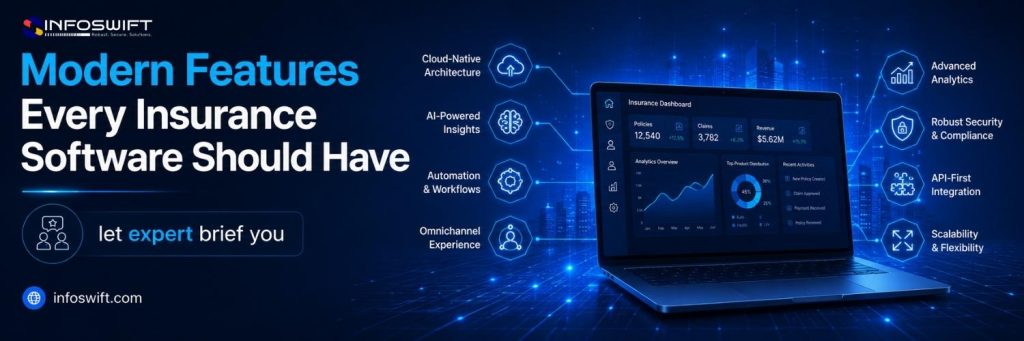
Modern Features Every Insurance Software Should Have
A modernized insurance software platform is built around a few core capabilities that legacy systems typically lack.
AI-Powered Automation: Modern platforms use AI to handle smart workflows, automated document processing, and claims automation reducing the manual review work that slows down legacy systems.
Insurance Quote System: A modern insurance quote system delivers instant premium calculations and real-time quotes, pulls from multiple carriers simultaneously, and supports customer self-service instead of requiring an agent for every request.
Insurance Quote Portal Software: Insurance quote portal software gives customers a way to compare quotes online, gives agents a working dashboard, and supports digital policy purchase from quote to bind without manual paperwork.
Quote Manager Software: Quote manager software tracks every quote through its lifecycle, manages follow-ups automatically, organizes lead management, and surfaces conversion analytics so agencies can see where quotes are won or lost.
Policy Management: Modern policy management includes digital policy storage, automated renewal reminders, streamlined endorsements, and full policy lifecycle management in one system instead of scattered spreadsheets.
API Integration: Modern insurance software connects directly with CRMs, payment gateways, carrier APIs, accounting software, and document management systems, removing the manual data entry that legacy platforms require between tools.
Insurance Quoting Software vs Legacy Quoting Systems: The operational difference between legacy quoting systems and modern insurance quoting software is significant enough to affect close rates directly.
Legacy Software | Modern Insurance Quoting Software |
Manual quoting | Instant quotes |
Limited carriers | Multi-carrier support |
Slow processing | Automated workflows |
High errors | AI-powered validation |
Desktop only | Cloud-based access |
Difficult reporting | Real-time dashboards |
Benefits of Insurance Quote Portal Software
For agencies still relying on manual quoting, moving to insurance quote portal software changes both the customer experience and the sales pipeline:
- Self-service quoting that reduces agent workload
- Online policy purchase without in-person or phone-based steps
- Faster customer onboarding from quote to active policy
- Increased lead conversions through immediate response
- 24/7 accessibility for customers outside business hours
- Improved customer satisfaction through a faster, simpler process
Insurance Software Modernization Roadmap
Modernizing legacy insurance software works best as a structured, phased process rather than a single disruptive overhaul:
Step 1: Assess current systems — audit existing software, data, and workflows to identify what to keep, replace, or retire.
Step 2: Identify business requirements — define what the new system must support across quoting, policy management, and reporting.
Step 3: Migrate legacy data — move policy, customer, and claims data into the new environment without loss or duplication.
Step 4: Cloud migration — shift infrastructure to a secure, scalable cloud environment.
Step 5: API integrations — connect the new system to CRMs, carriers, payment processors, and other core tools.
Step 6: Workflow automation — automate manual processes across quoting, underwriting, and policy servicing.
Step 7: Testing — validate performance, security, and data accuracy before go-live.
Step 8: Go-live — deploy the modernized system with minimal disruption to agents and customers.
Step 9: Continuous optimization — monitor usage and performance, refining the system as the agency’s needs evolve.
Technologies Driving Modern Insurance Software
Several core technologies make today’s insurance software fundamentally more capable than legacy platforms:
- Artificial Intelligence for decisioning and workflow automation
- Machine Learning for risk scoring and pattern detection
- OCR for automated document and form processing
- Robotic Process Automation for repetitive administrative tasks
- Cloud Computing for scalable, remote-accessible infrastructure
- API Integration for connecting carriers, CRMs, and payment systems
- Business Intelligence for real-time operational reporting
- Predictive Analytics for underwriting and retention insights
- Cybersecurity built into the platform rather than added after the fact
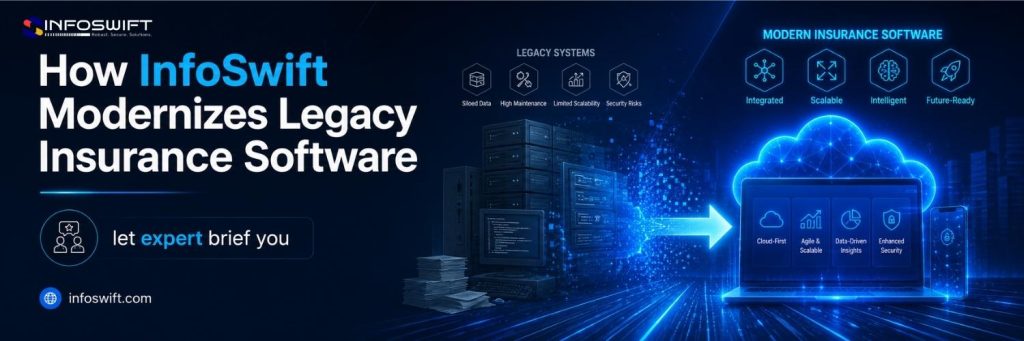
How InfoSwift Modernizes Legacy Insurance Software
InfoSwift works as a technology partner for insurance agencies moving off legacy systems, covering the full scope of modernization under one team:
- Legacy Application Modernization
- Custom Insurance Software Development
- Insurance Agency Software
- Insurance Quoting Software
- Insurance Quote Portal Software
- Quote Manager Software
- AI Workflow Automation
- API Integration
- Cloud Migration
- Data Migration
- UI/UX Modernization
- Enterprise Security
- Ongoing Support & Maintenance
Why Choose InfoSwift?
- Insurance domain expertise across quoting, policy, and claims workflows
- AI-powered solutions built for real agency operations
- Enterprise-grade architecture designed to scale
- Custom development instead of rigid, one-size-fits-all platforms
- Agile implementation with visible milestones throughout the project
- Cloud-native applications built for long-term flexibility
- Secure integrations across carriers, CRMs, and payment systems
- Scalable solutions that grow with the agency
- Dedicated support beyond go-live
Legacy insurance software refers to older systems used for quoting, policy management, or claims that were built before modern cloud, API, and automation capabilities existed, and are often costly to maintain.
Modernizing insurance software improves processing speed, reduces manual work, strengthens security, and gives agencies the infrastructure needed to integrate with modern tools and scale operations.
Insurance quoting software automates premium calculations and generates quotes in real time, often pulling from multiple carriers so agents and customers can compare options instantly.
A modern insurance quote system reduces manual quoting time, minimizes errors, and lets customers self-serve, freeing agents to focus on more complex policies and relationship management.
Insurance quote portal software gives customers a self-service interface to compare and purchase policies online, while giving agents a dashboard to manage and track incoming quotes.
Quote manager software tracks quotes through their full lifecycle, automates follow-ups, manages leads, and provides analytics on conversion rates across the sales pipeline.
Most legacy insurance software has limited or no API support, which is why modernization projects typically include rebuilding or replacing the system rather than adding integrations on top of it.
Timelines depend on system complexity and data volume, but most modernization projects are broken into phased steps over several months rather than delivered as a single long build.